
Recycled polypropylene (PP) granules are used everywhere from woven sacks and strapping to crates, furniture and automotive parts. Because PP grades differ so much, the melt flow index (MFI) is the first filter we apply to every enquiry — before colour, price or packing. This guide explains why, and how to choose the right recycled PP for your process.
Recycled PP Granules: How to Choose the Right MFI for Raffia, Injection and Extrusion
Homopolymer or copolymer? Which MFI for raffia tape, injection moulding or extrusion? A practical guide to specifying recycled polypropylene granules.
1. Homopolymer or copolymer?
Homopolymer PP is stiffer and is common in raffia tape, fibres, sheets and rigid parts. Copolymer (impact) PP contains ethylene, so it is tougher at low temperatures and is common in crates, buckets, furniture and automotive parts. Recycled lots are often sorted by source — raffia waste is usually homopolymer, while crate and bumper regrind is usually copolymer. Tell your supplier which one your part needs.
2. Matching MFI to your process
PP melt flow is measured at 230°C with a 2.16 kg load (ISO 1133 / ASTM D1238). Typical ranges buyers ask for:
| Process | Typical MFI (230°C/2.16 kg) |
|---|---|
| Raffia / woven tape | 3–5 g/10 min |
| Sheet and thermoforming | 2–6 g/10 min |
| Injection moulding (general) | 8–25 g/10 min |
| Thin-wall injection | 25 g/10 min and above |
| Fibre / non-woven | Higher flow, grade specific |
A lot with too low an MFI will not fill your mould; one with too high an MFI will make weak tape. If you are unsure, share the virgin grade you use now and we match its MFI band.
3. Colour, filler and ash
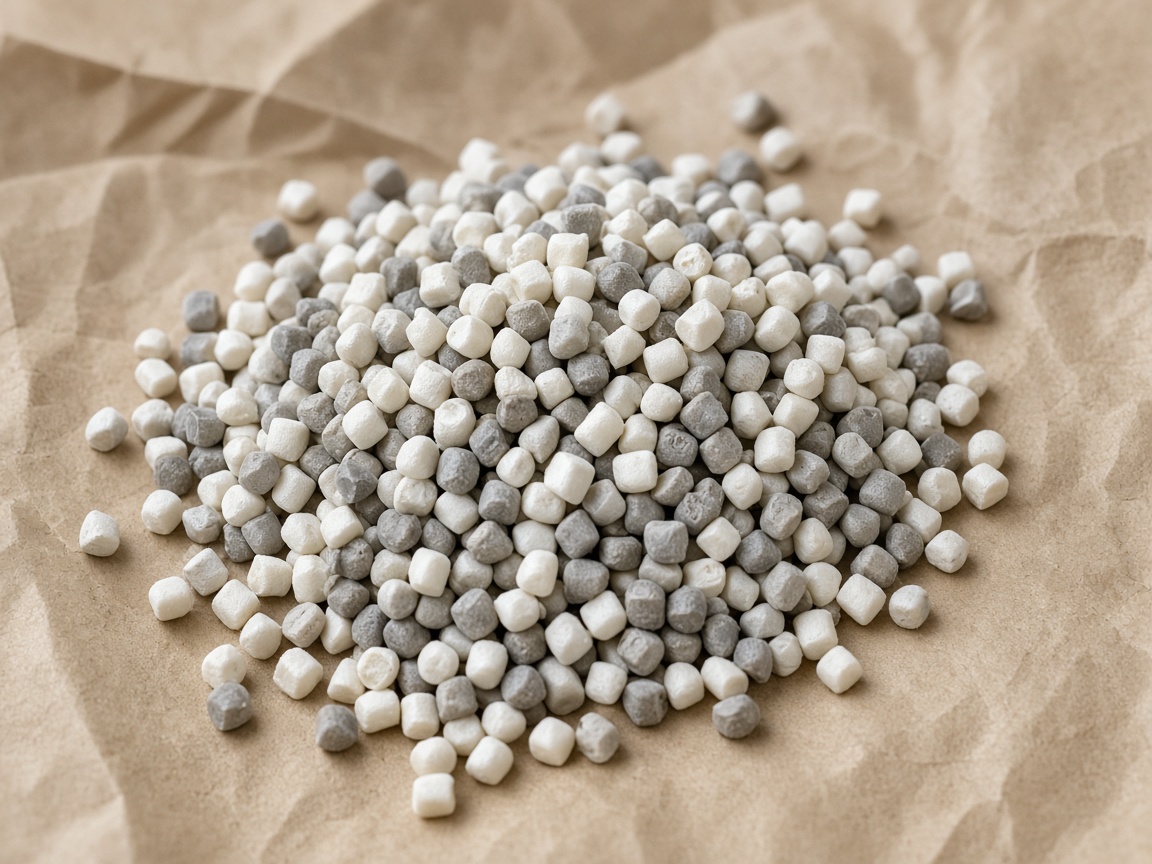
Recycled PP comes in natural, black, grey and many mixed shades. Real photos of the lot are essential — on our recycled PP granules page you can see actual colour samples. Some recycled PP contains calcium carbonate or talc filler from the original product. Filler is not always bad, but it changes density and stiffness, so agree an ash or filler limit in advance if your process is sensitive.
4. What to check before ordering
- MFI band and test method
- Homopolymer or copolymer preference
- Colour and photos of the actual lot
- Ash / filler limit if relevant
- Moisture and packing
- Trial lot before monthly supply
5. Sourcing recycled PP from India
India produces large volumes of recycled PP from woven-sack, packaging and industrial waste. Working through a sourcing partner in Gujarat lets you reach several processors through one point of contact, with lot checks before release and export documents prepared under one IEC. Polypropylene in primary form is usually classified under HS code 3902.10 — confirm with your customs broker.
Frequently asked questions
What MFI is used for PP raffia?
Raffia and woven-bag tape lines usually run recycled PP with an MFI of about 3–5 g/10 min (230°C/2.16 kg).
Can recycled PP be used for injection moulding?
Yes. Injection moulders typically use recycled PP with an MFI of 8–25 g/10 min, depending on wall thickness and flow length.
Homopolymer or copolymer — which should I choose?
Choose homopolymer for stiffness (tape, sheet, rigid parts) and copolymer for impact strength (crates, buckets, automotive parts).
Need a quotation?
Send your product, specification, monthly quantity and destination. We reply with availability, options and next steps.