
Recycled HDPE (high-density polyethylene) granules are one of the most traded recycled plastics in the world. They go into jerry cans, drums, pipes, crates, film and countless moulded parts. But “recycled HDPE” is not one product — it is a family of grades, and buying the wrong one is the most common and most expensive mistake buyers make. This guide explains how to specify recycled HDPE granules so that the material that arrives actually runs on your machine.
Recycled HDPE Granules: A Buyer’s Guide to Grades, MFI and Sourcing from India
Blow, pipe, film or injection? How to specify recycled HDPE granules by MFI, density and colour — and what to check before you order from an Indian supplier.
1. Start with your process, not the price
The single most important question is how you will process the material. HDPE behaves very differently in blow moulding, pipe extrusion, film blowing and injection moulding, and recycled grades are sorted and compounded with one of these processes in mind.
- Blow moulding (jerry cans, drums, bottles) needs a low melt flow so the parison holds its shape.
- Pipe and profile extrusion also needs a low melt flow and good melt strength.
- Film and liners need low flow and a clean melt with few gels.
- Injection moulding (crates, pails, caps, household items) needs a much higher melt flow so the mould fills quickly.
2. The numbers that matter: MFI and density
Melt flow index (MFI), measured at 190°C with a 2.16 kg load (ISO 1133 / ASTM D1238), tells you how easily the melt flows. Density tells you whether the material really is HDPE and how stiff the final part will be. Typical ranges buyers ask for are below — every lot should be confirmed against your own window.
| Property | Typical range |
|---|---|
| MFI for blow moulding / pipe | 0.2–1 g/10 min |
| MFI for film | 0.3–1 g/10 min |
| MFI for injection moulding | 5–20 g/10 min |
| Density | 0.940–0.960 g/cm³ |
| Moisture (dry-packed lots) | Typically below 0.1% |
| Pellet size | About 3–5 mm |
If you do not know your target MFI, send the grade name of the virgin resin you use today. Its datasheet gives the MFI and density band your machine is set for, and a recycled grade can be matched to it.
3. Colour: natural, black or mixed
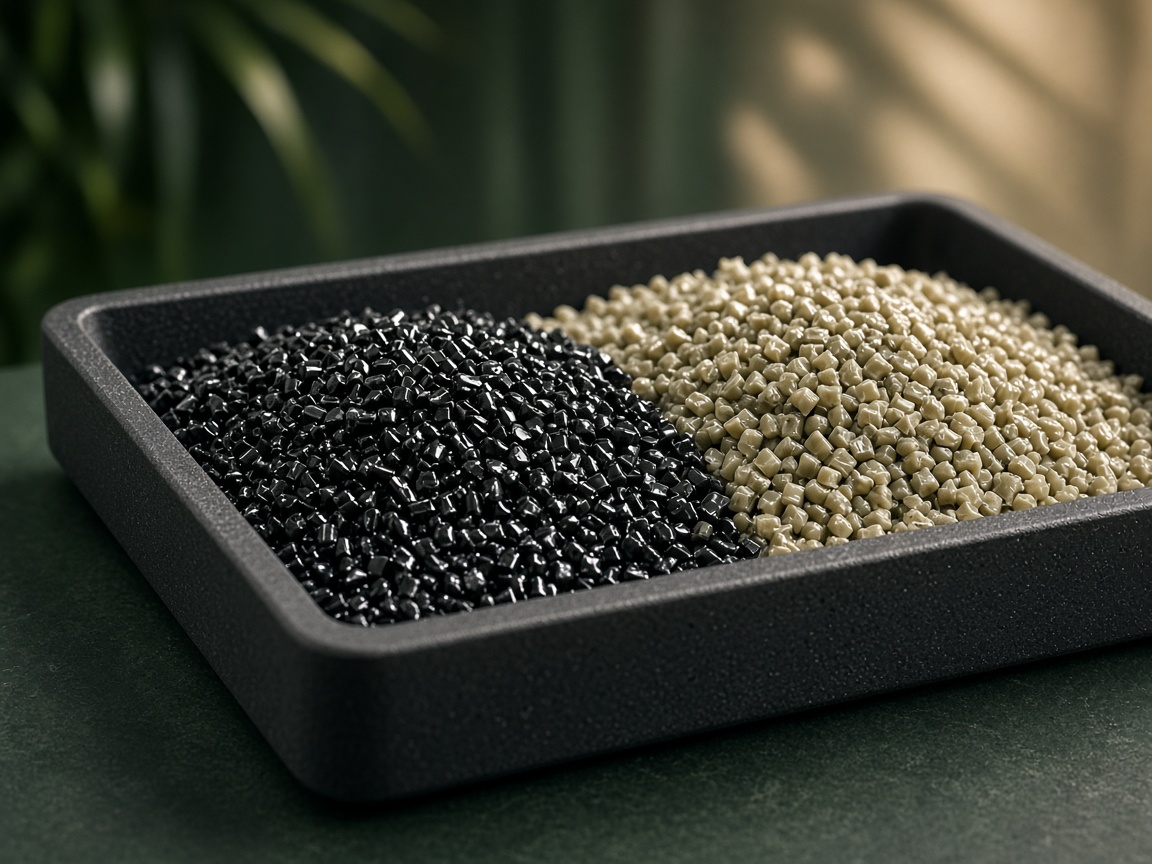
Colour drives price. Natural (milky white) recycled HDPE comes from sorted, uncoloured feedstock and is the most valuable because you can colour it yourself. Black is the most common and the most forgiving. Mixed or coloured lots are the cheapest but only work where appearance does not matter. Ask for real photos of the lot, not catalogue images.
4. Contamination and consistency checks
The biggest risks with recycled HDPE are contamination (other polymers such as PP, paper, metal or dirt), gels and black specks, and variation from one lot to the next. Before ordering, agree in writing on:
- The MFI and density band, and how they were tested
- Acceptable colour and visual standard (photos of the actual lot)
- Filtration level, especially for film
- Moisture limit and packing (sealed bags for dry material)
- A sample or trial lot before regular supply
5. Sourcing recycled HDPE from India
India has a large recycling and reprocessing industry, especially in Gujarat and Maharashtra, and is a competitive source of recycled HDPE for buyers in Asia, the Middle East and beyond. A trading and sourcing partner such as JainNexa International in Ahmedabad matches your specification to verified Indian processors, checks incoming lots and handles export documents. You can see our typical HDPE specification on the recycled HDPE granules page.
6. Packing, container loads and HS code
Recycled HDPE granules are usually packed in 25 kg bags or 500–1,000 kg jumbo bags. A 20 ft container typically carries around 16–20 MT and a 40 ft high-cube around 24–26 MT, depending on packing and destination weight limits. HDPE with a density of 0.94 or more is usually classified under HS code 3901.20 — confirm the exact tariff line with your customs broker.
Quick checklist before you request a quote
- Process: blow, pipe, film or injection
- Target MFI and density (or your current virgin grade)
- Colour: natural, black or mixed
- Monthly quantity and trial-lot size
- Packing and delivery port or city
Frequently asked questions
What MFI recycled HDPE should I buy?
Blow-moulding and pipe users usually need 0.2–1 g/10 min; injection moulders usually need 5–20 g/10 min. Match it to the virgin grade you use today.
Is recycled HDPE as strong as virgin HDPE?
Well-sorted, filtered recycled HDPE can perform close to virgin in many non-critical applications, but properties vary by feedstock. Always run a trial lot first.
What is the HS code for recycled HDPE granules?
HDPE with a density of 0.94 or more is usually classified under HS 3901.20. Your customs broker confirms the final code.
Need a quotation?
Send your product, specification, monthly quantity and destination. We reply with availability, options and next steps.